
One of the most common questions new cord-cutters ask is whether IPTV is legal. The short answer is yes — IPTV technology itself is completely legal. However, the legality depends on the specific service you use and the content it delivers. In this article, we break down the legal landscape of IPTV in 2026, explain the differences between legal and unauthorized services, and help you make informed choices about your streaming setup.
What Makes IPTV Legal?
IPTV is simply a technology — a method of delivering video content over internet protocol networks. It is the same underlying technology used by Netflix, Disney+, Hulu, YouTube TV, and every other legitimate streaming platform. The technology itself carries no legal issues. What determines legality is whether the content being delivered is properly licensed and authorized by the content owners.
Major corporations use IPTV technology every day. AT&T TV, Sling TV, and FuboTV are all IPTV services that operate with full licensing agreements. When someone asks “is IPTV legal,” they are usually asking about third-party IPTV services — and the answer depends on how that specific provider sources its content.
Legal IPTV Services vs Unauthorized Services
Licensed IPTV services
Licensed IPTV services have agreements with content providers, broadcasters, and rights holders to distribute their channels and content. These services pay licensing fees, comply with broadcasting regulations, and operate as legitimate businesses. Examples include YouTube TV, Sling TV, FuboTV, Hulu + Live TV, and IPTV services offered by telecom providers.
Unauthorized IPTV services
Unauthorized services redistribute content without proper licensing. These services typically offer thousands of channels at very low prices but operate in a legal gray area. While using such services as a viewer generally carries minimal legal risk in most countries, the operators themselves face serious legal consequences including fines and criminal charges.
IPTV Legality by Country
United States
In the US, using IPTV services is legal. The legal responsibility for unauthorized content distribution falls on the provider, not the end user. However, the No Electronic Theft Act and the Digital Millennium Copyright Act (DMCA) provide frameworks for prosecuting providers of unlicensed content. As a viewer, using a licensed or properly operating IPTV service is entirely lawful.
United Kingdom
UK law is stricter on unauthorized streaming. The Digital Economy Act and Copyright, Designs and Patents Act cover IPTV-related offenses. While casual viewers are rarely targeted, authorities have prosecuted sellers and operators of unauthorized IPTV services. Using a legitimate IPTV subscription is perfectly legal in the UK.
European Union
EU copyright law varies by member state, but the 2017 European Court of Justice ruling established that knowingly streaming from an obviously illegal source can constitute copyright infringement. In practice, enforcement focuses overwhelmingly on providers and sellers rather than individual viewers. Legal IPTV services operate freely across the EU.
Canada, Australia, and other regions
Most countries follow similar patterns: the technology is legal, licensed services are legal, and enforcement actions target providers rather than viewers. Canada and Australia both have copyright laws that primarily hold distributors responsible. Regardless of your location, using a reputable IPTV provider that operates transparently is the safest approach.
How to Choose a Safe IPTV Provider
To ensure you are on the right side of the law and receiving a quality service, look for these characteristics in an IPTV provider: a professional website with clear business information, transparent pricing with no hidden fees, responsive customer support available through multiple channels, a published refund policy, and a track record of reliable service. Providers that operate openly and invest in infrastructure like anti-freeze technology and high-uptime servers are generally the safest choices.
Titan IPTV operates with full transparency — a professional website, clear pricing plans, published terms of service, privacy policy, and a 7-day money-back guarantee. Our 24/7 customer support team is always available via email and live chat.
Should You Use a VPN with IPTV?
Regardless of which IPTV service you use, a VPN is recommended for privacy. A VPN encrypts your internet traffic and prevents your ISP from monitoring your viewing habits or throttling your streaming speeds. It adds a layer of privacy without affecting streaming quality — in fact, it often improves performance by bypassing ISP throttling. Read our detailed guide on the best VPNs for IPTV for specific recommendations.
The Bottom Line on IPTV Legality
IPTV technology is legal everywhere. The legality of a specific IPTV service depends on its content licensing and how it operates. To stay safe, choose a reputable provider with transparent business practices, use a VPN for privacy, and enjoy the massive savings and flexibility that IPTV offers over traditional cable TV.
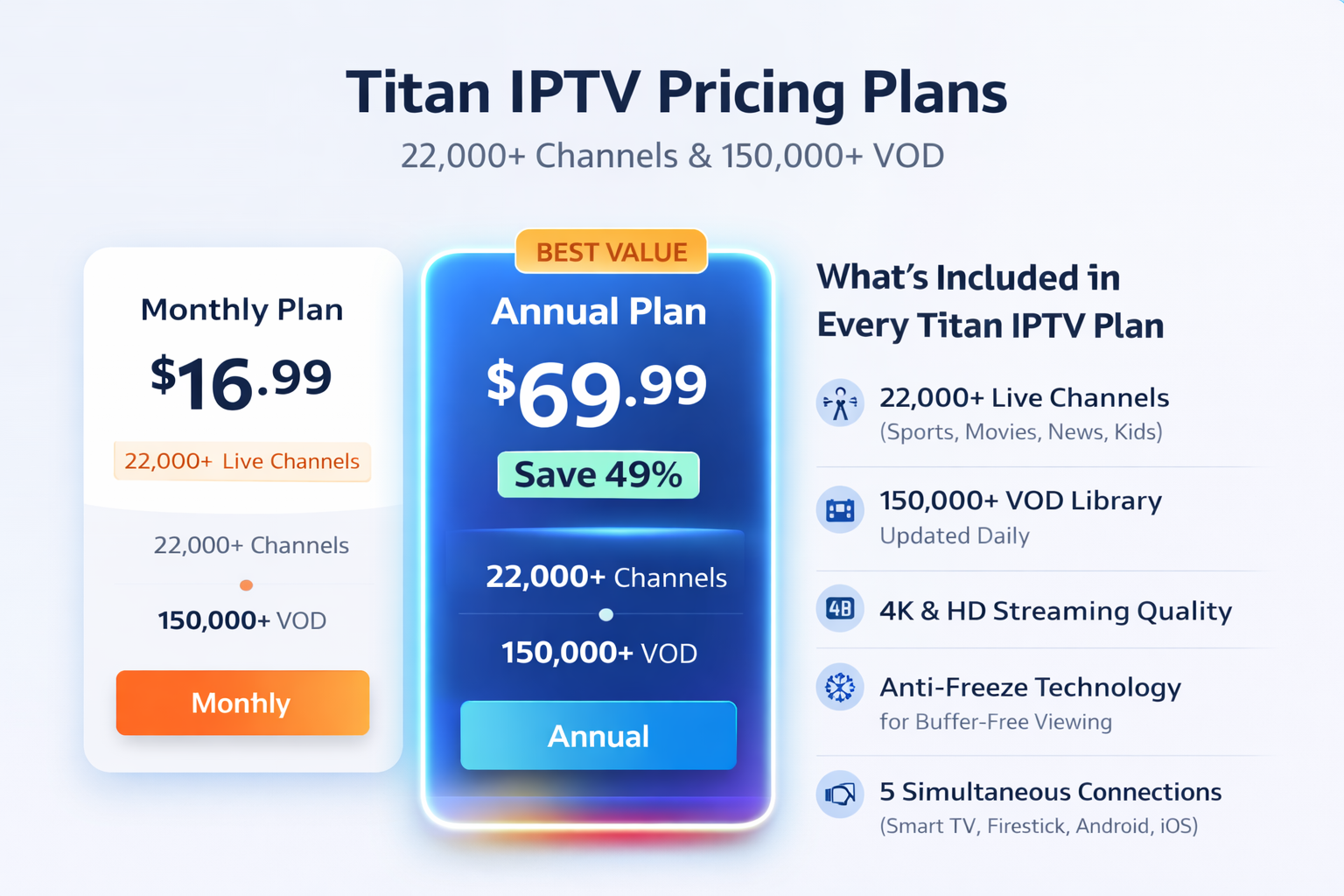
If you are looking for a reliable IPTV service with 22,000+ channels, 150,000+ VODs, and anti-freeze technology, explore Titan IPTV plans and start streaming today with a risk-free 7-day money-back guarantee. Visit our setup guide to get started in minutes.